

- EFSA places 400 mg per day as the adult caffeine intake that does not raise safety concerns for healthy non-pregnant adults.
- A 400 mg caffeine dose taken 6 hours before bed disrupted sleep in a controlled trial.
- The midafternoon dip is a documented sleepiness window, often discussed around 14:00 to 16:00.
- A better afternoon concentration plan starts with dose math, light exposure, task design, and short breaks before another coffee.
At 3pm, coffee starts asking for a receipt. The first cup bought you a clean morning. The second kept the meeting tolerable. The third is where the calculation changes: more caffeine, less room before sleep, and usually the same hard task still sitting on the screen.
Caffeine is a methylxanthine stimulant that works mainly by blocking adenosine receptors in the brain. Adenosine is a signalling molecule tied to sleep pressure and wake regulation; reviews describe caffeine's central action as adenosine receptor antagonism (Fredholm et al., 2010). Concentration is the practical side of this biology: your ability to hold attention on one task long enough to finish meaningful work.
What is the afternoon caffeine ceiling?
The afternoon caffeine ceiling is the point where another caffeinated drink adds less useful attention than cost: later sleep timing, jittery work, or a fourth cup that mostly delays fatigue.
The ceiling is partly a dose question. EFSA's safety review states that single caffeine doses up to 200 mg and daily intake up to 400 mg do not raise safety concerns for healthy non-pregnant adults (EFSA caffeine safety, 2015). That number is not a productivity target. It is a safety reference.
The ceiling is also a clock question. Drake and colleagues tested 400 mg of caffeine at bedtime, 3 hours before bedtime, and 6 hours before bedtime. All 3 timings disrupted sleep, including the 6-hour condition (Drake et al., 2013).
| Afternoon choice | What to count | Why it matters |
|---|---|---|
| Espresso | Approximate mg of caffeine | Pushes the daily total closer to your personal limit |
| Energy drink | Caffeine plus sugar or sweeteners | Adds a drink format when the real problem may be task design |
| Caffeine-free pouch ritual | Caffeine: 0 mg | Keeps the work-block cue without adding stimulant load |
Why does concentration often dip around 3pm?
The midafternoon dip is a real pattern in performance and sleepiness research, and it is not explained only by lunch.
Reviews of the post-lunch dip describe a decline in performance during midafternoon hours linked with increased sleep propensity (Monk, 2005). Another modelling paper treats the dip as a variation in alertness that can appear even apart from meal ingestion (Bes et al., 2009).
That matters because the fix is usually too narrow. If you treat every afternoon dip as a caffeine shortage, you ignore sleep debt, low light, an overlarge lunch, a vague task, and the fact that your brain has been switching context since breakfast.

How should you calculate the next coffee?
Run a 3-line calculation before you pour it: how much caffeine have you already had, how many hours remain before bed, and what exact task needs attention.
Here is the simple version. If breakfast coffee was 100 mg, late-morning coffee was 100 mg, and the energy drink at lunch was 160 mg, your total is already 360 mg. One more 80 to 100 mg serving puts you around or above the 400 mg adult reference from EFSA (EFSA caffeine safety, 2015).
The timing line can be even more useful. If you sleep at 23:00, 17:00 is already the 6-hour mark tested in the Drake trial. A late dose might feel productive for 45 minutes and make tomorrow's first hour worse.
Then ask what kind of work is left. Drafting a strategy memo needs a clean start and a defined finish. Clearing invoices needs friction removed. Reading dense research may need light, a chair change, and 2 printed pages. Caffeine can mask sleep pressure for a while. It won't choose the task.
What works before another coffee?
Use the cheapest levers first: brighter light, a short reset, and a smaller task boundary.
Light is not motivational theatre. A Cochrane review on workplace lighting found very low-quality evidence that high correlated colour temperature light may improve daytime worker alertness (Pachito et al., 2018). A separate EEG study during the post-lunch dip reported that blue-enriched light reduced alpha activity and increased task performance (Huiberts et al., 2015).
Breaks are smaller than most people think. Ariga and Lleras tested brief mental breaks during a sustained attention task and found that deactivating and reactivating task goals helped prevent vigilance decline (Ariga and Lleras, 2011). In practice, that can mean 90 seconds away from the screen, water, window light, then one clearly named next action.
A clean afternoon block can look like this:
- 14:45: write the next task as one verb plus one object.
- 14:47: stand near daylight or a bright workspace for 3 to 5 minutes.
- 14:52: set a 25-minute timer and close all unrelated tabs.
- 15:17: stop, mark the next move, take a 2-minute break.
- 15:20: repeat once if the work is still coherent.
Where do natural nootropics and supplements fit?
Natural nootropics and concentration supplements fit best after the basics are in place: sleep, caffeine math, task design, light, food, and breaks.
L-theanine is one ingredient often discussed in attention research. A double-blind, placebo-controlled crossover study reported dose-dependent changes in neurophysiological measures of attention after L-theanine intake (Baba et al., 2021). That is ingredient research, not a blanket promise about any finished pouch, drink, or capsule.
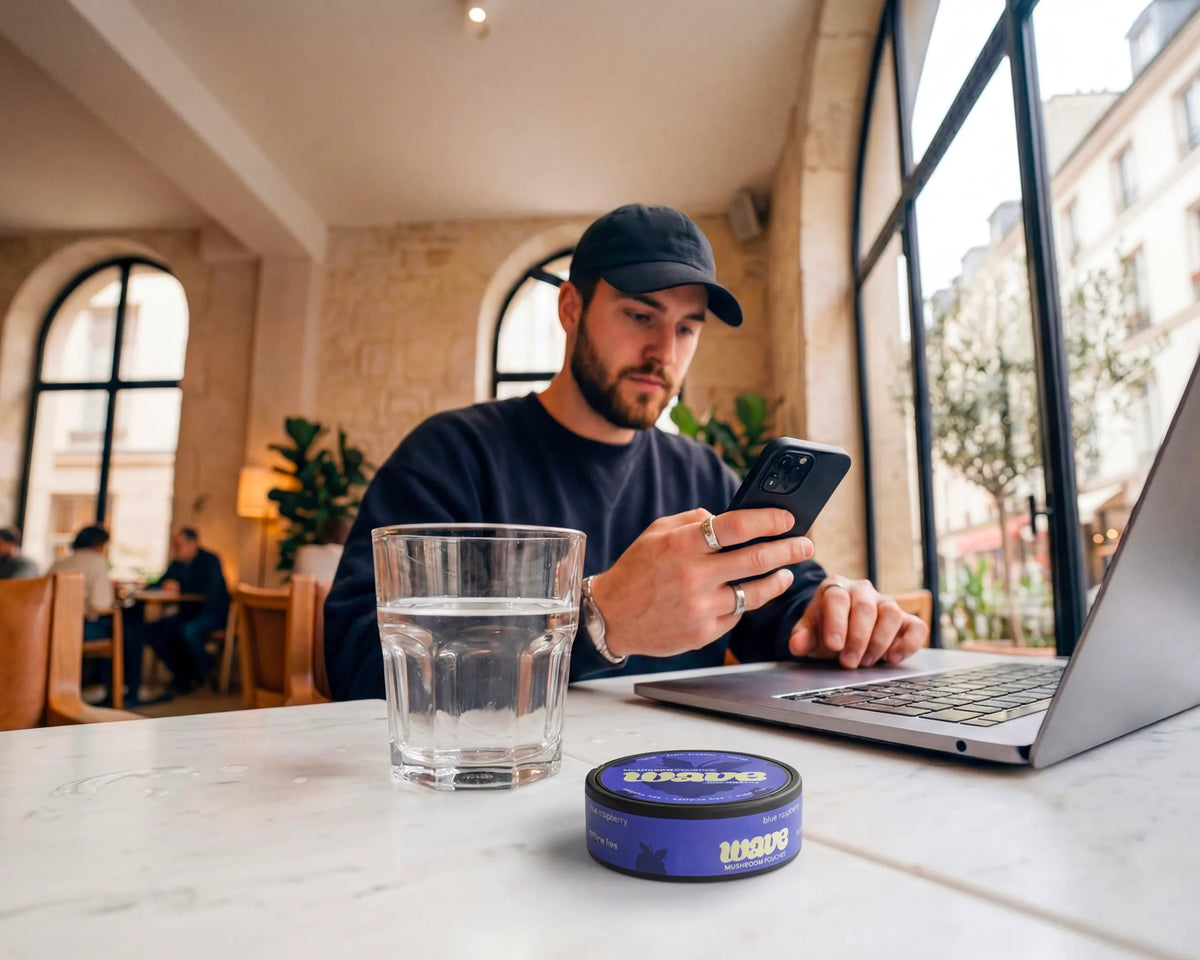
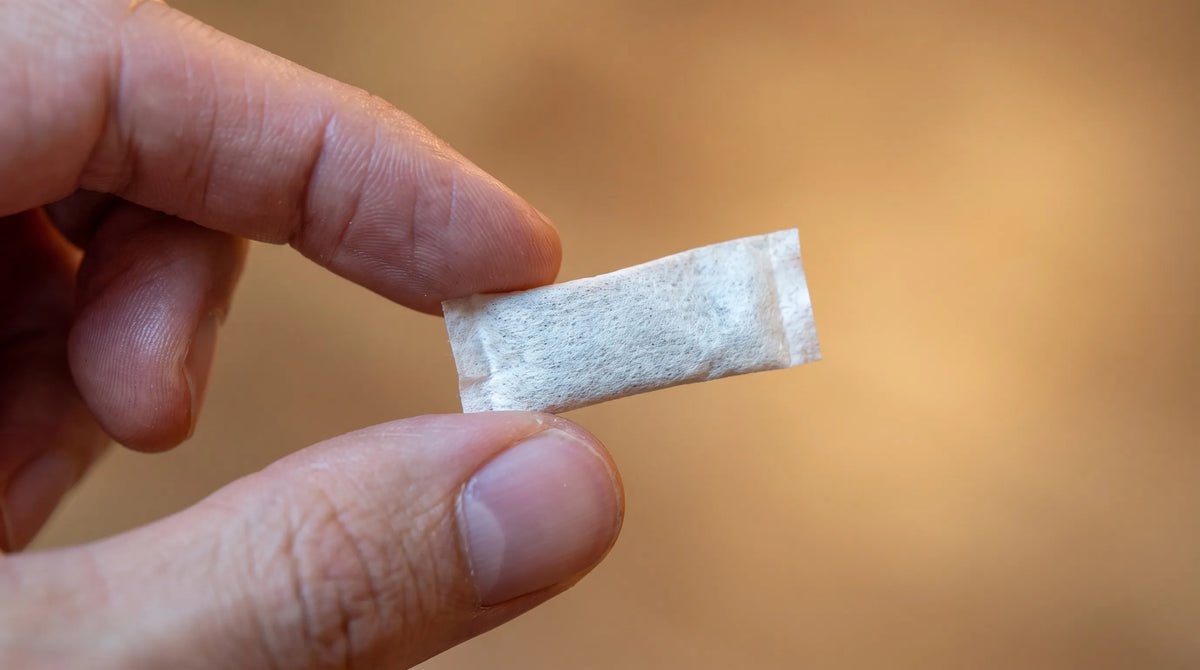
WAVE Natural mushroom pouches sit in the caffeine-free side of this decision. Each pouch is an oral supplement format with L-tyrosine, L-theanine, functional mushroom extracts, and B12. Vitamin B12 contributes to normal psychological function.
The useful part is the format. A pouch can sit inside a work block without making a drink, adding sugar, or raising your caffeine total. WAVE is caffeine free, nicotine free, and sugar free, so it belongs in a different column from coffee, energy drinks, and stimulant pouches.
What is the 3pm protocol?
The 3pm protocol is a 10-minute decision tree: count caffeine, fix the environment, define the task, then choose the lowest-cost ritual that helps you start.
| Step | Question | Action |
|---|---|---|
| 1 | How many mg are already in the day? | Write the total before adding more |
| 2 | How close is bedtime? | Treat the 6-hour window as a hard warning |
| 3 | Is the task actually defined? | Turn "work on project" into one next action |
| 4 | Can the room do more? | Use light, standing, water, and a short break |
| 5 | Do you still want a ritual? | Choose one that does not add caffeine if the ceiling is close |
This is not glamorous. It is the point. Afternoon concentration usually improves when the next action is less vague and the stimulant decision is less automatic.
Frequently asked questions
How much caffeine is too much in one day?
EFSA states that up to 400 mg per day does not raise safety concerns for healthy non-pregnant adults. Personal tolerance varies, so treat that number as a ceiling for counting, not a target to hit.
Why do I lose concentration in the afternoon?
The midafternoon dip is linked with sleepiness and performance changes. Sleep debt, low light, meal size, task switching, and vague work can all make it worse.
What should I try before another coffee?
Count your caffeine, get brighter light, define one next action, take a brief break, and run a 25-minute work block. Then decide whether more caffeine still makes sense.
Where does WAVE fit in an afternoon routine?
WAVE can be used as a caffeine-free oral pouch ritual inside a work block. It does not add caffeine to the day, so it fits when you want a defined routine without another coffee.
Food supplement. Not a substitute for a varied, balanced diet and a healthy lifestyle. WAVE is not a nicotine replacement therapy nor a means of quitting addictive substances. Do not exceed the recommended daily dose (max 6 pouches / 24 hours). Keep out of reach of children. Not suitable for pregnant or breastfeeding women. Product does not contain psilocybin or other psychoactive substances. 100% legal. Distributor: Gelm s.r.o., Příkop 843/4, 602 00 Brno · DIČ: CZ06169457