What’s inside
Ingredients listed.
Independent results published.
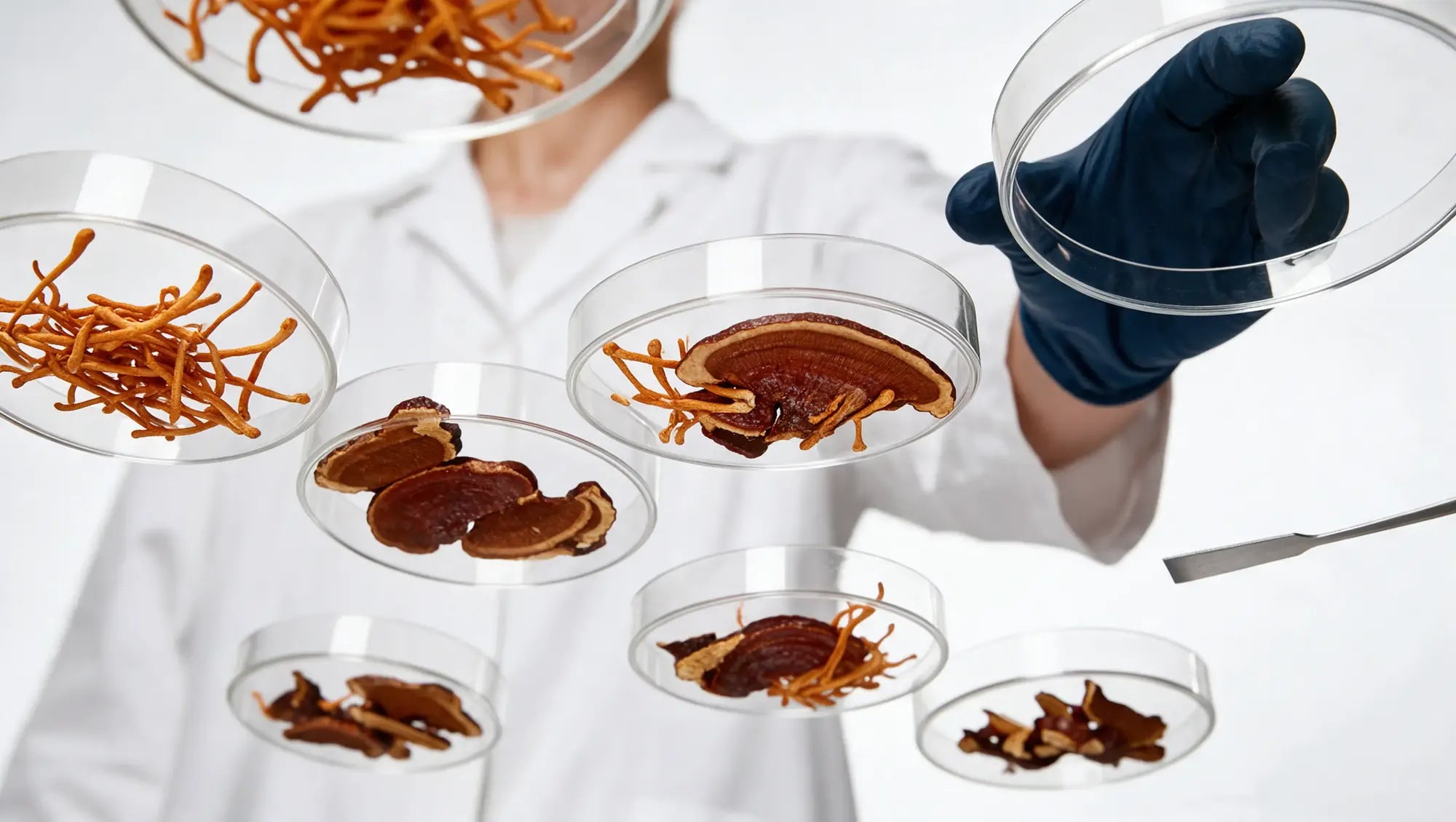
Not your everyday mushrooms.
Lion's Mane
Hericium erinaceus
Lion's Mane grows on hardwood trees and is easy to recognise by its long, white spines. WAVE uses fruiting body extract only, made by double extraction. A hot-water step draws out the water-soluble compounds, an alcohol step the alcohol-soluble ones.
Fruiting body extract
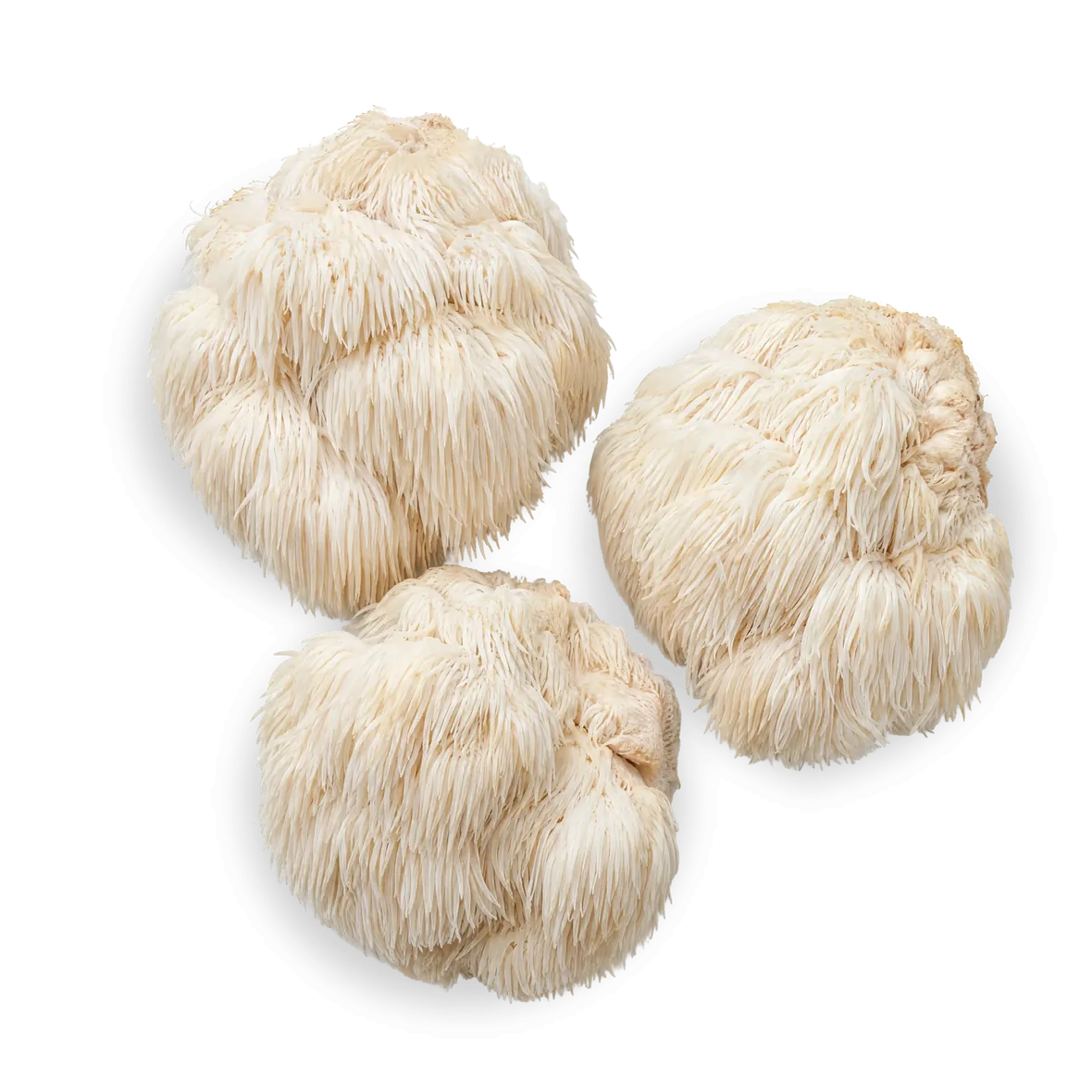
150 mg
Reishi
Ganoderma lucidum
Reishi is a bracket fungus with a glossy, reddish-brown cap that grows on hardwood. Its main compound groups are polysaccharides, including beta-glucans, and triterpenes. WAVE uses fruiting body extract only, made by double extraction with a hot-water step and an alcohol step.
Fruiting body extract
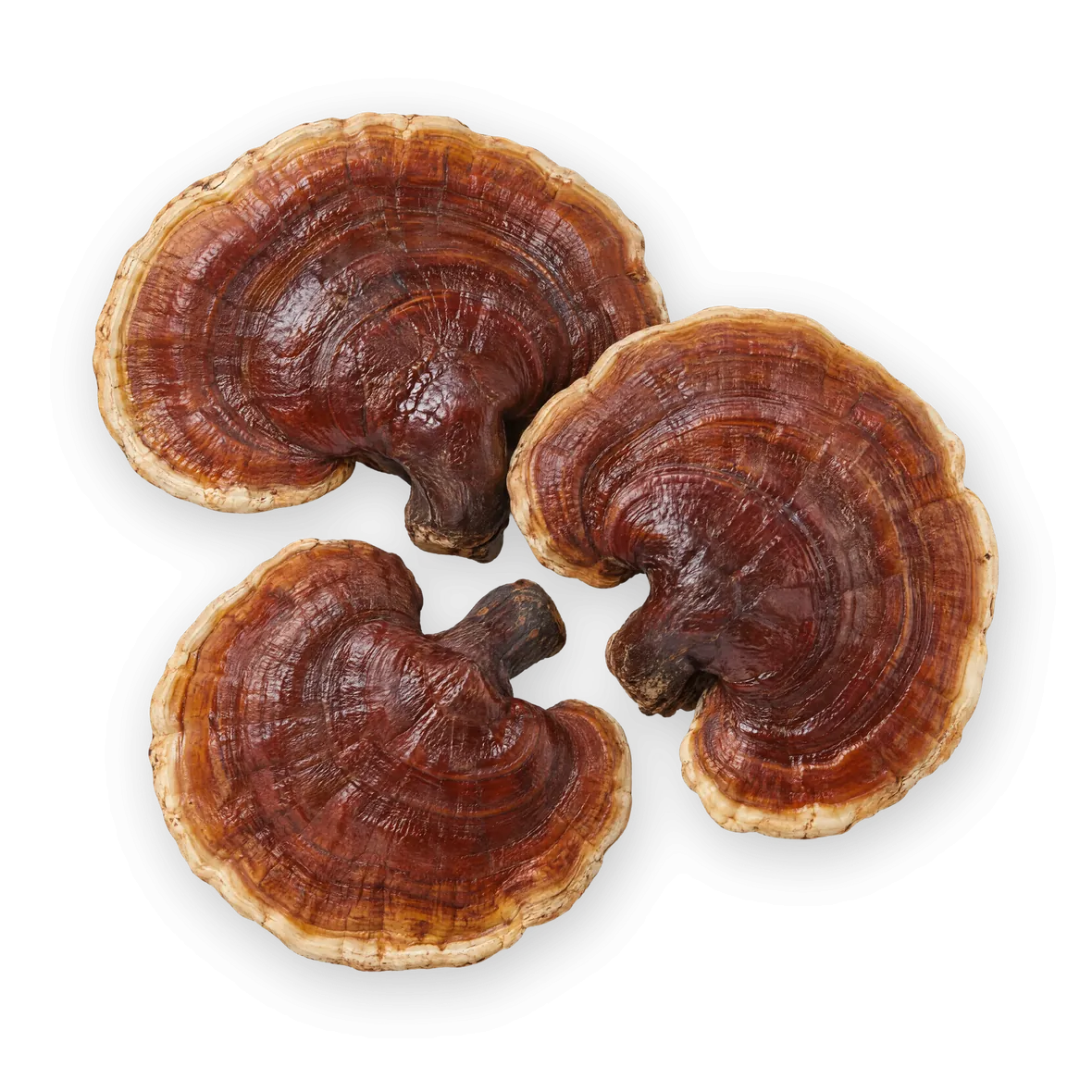
100 mg
Cordyceps
Samsoniella hepiali
The Cordyceps in WAVE is Samsoniella hepiali, listed by its exact species name. It is cultivated as mycelium, the fine root-like network of the fungus, and added to every pouch as mycelium powder.
Mycelium powder
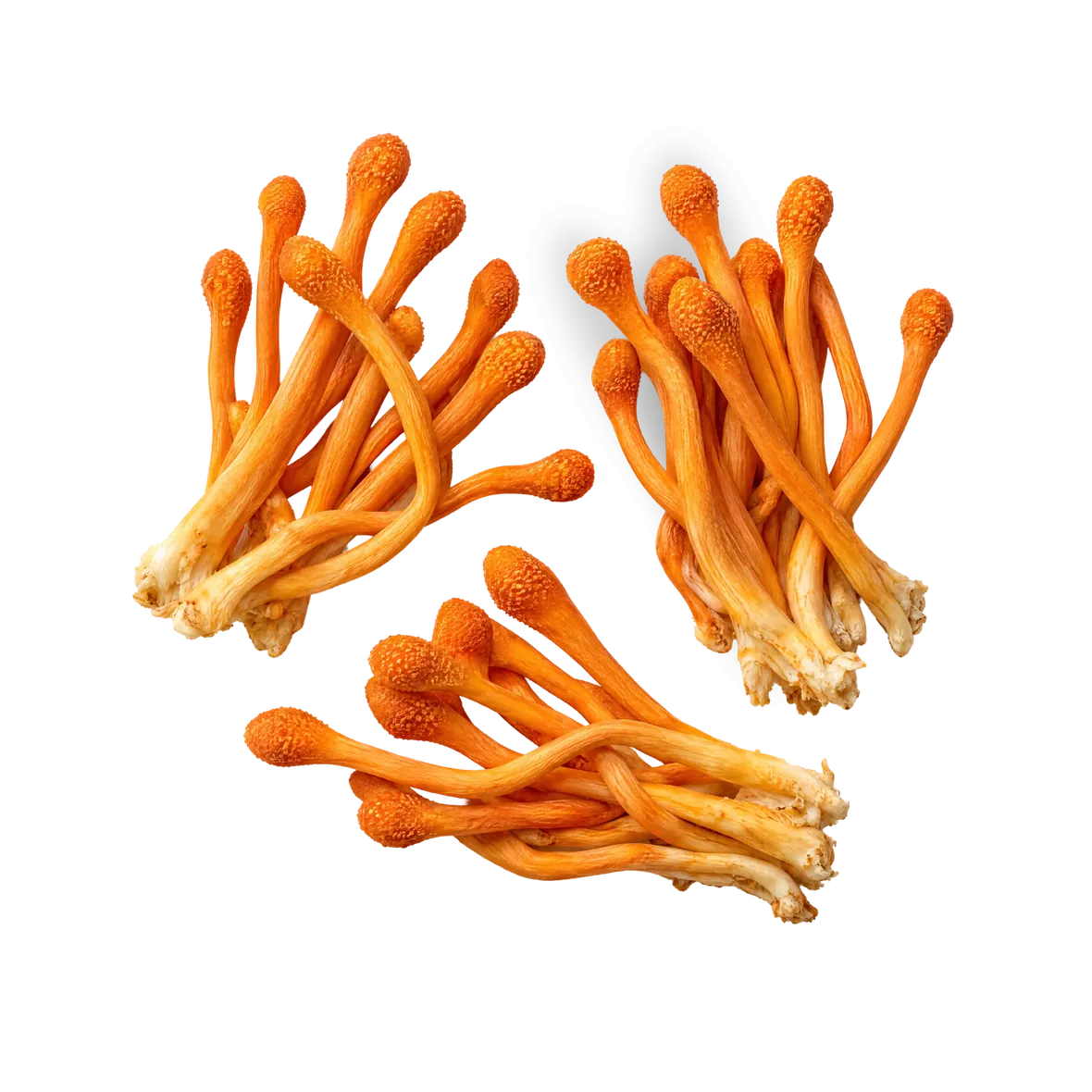
150 mg
L-Tyrosine
Amino acid
L-Tyrosine is an amino acid found naturally in protein-rich foods such as cheese, fish and legumes. Every WAVE pouch contains 100 mg.
Amino acid
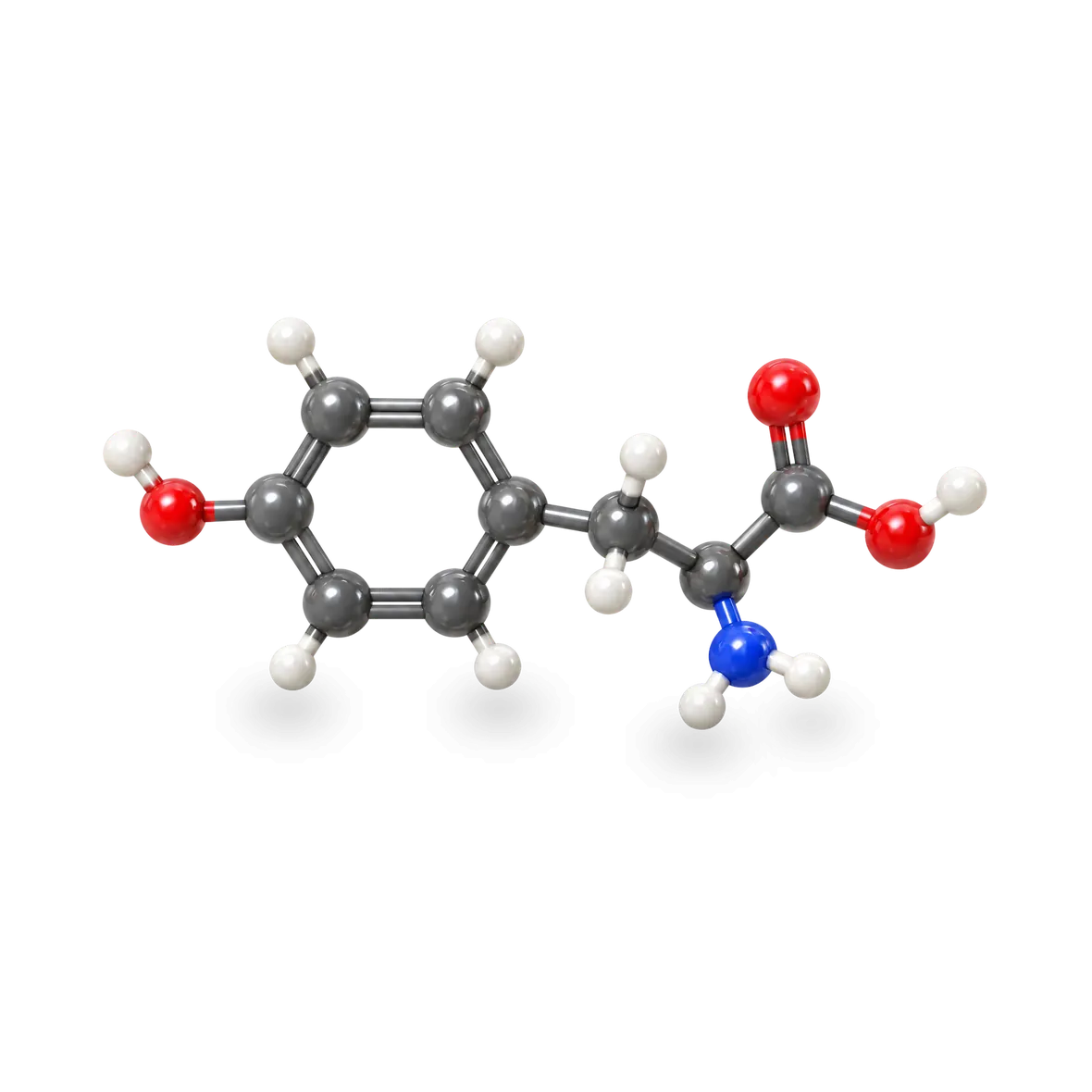
100 mg
L-Theanine
Amino acid
L-Theanine is an amino acid first identified in green tea leaves. WAVE adds 50 mg to every pouch, with no caffeine alongside it.
Amino acid
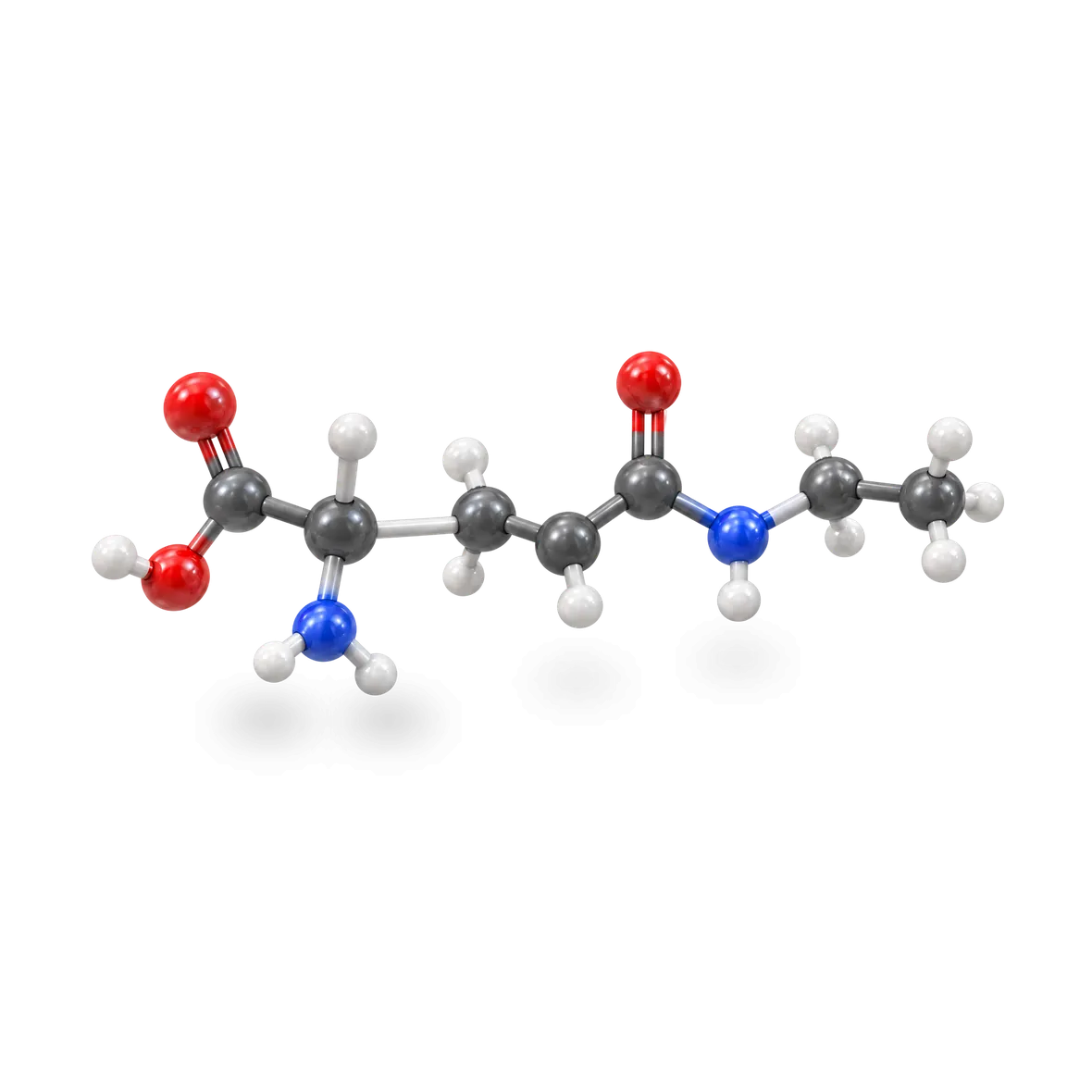
50 mg
Vitamin B12
Vitamin
Vitamin B12 contributes to normal psychological function, the normal functioning of the nervous system and the reduction of tiredness and fatigue. Every pouch contains 25 µg as cyanocobalamin, 1000% of the nutrient reference value.
Cyanocobalamin · 1000% NRV
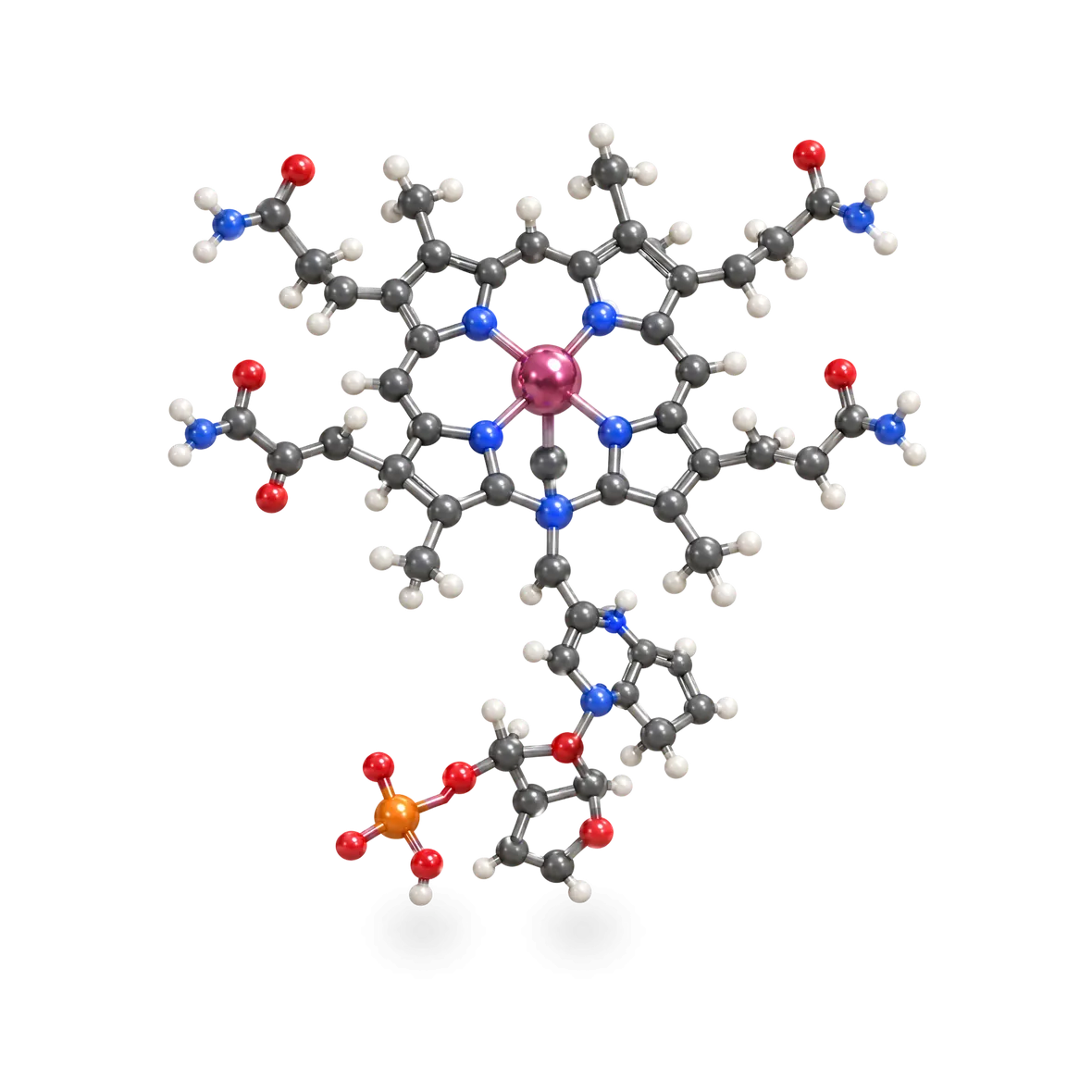
25 µg
Independent Lab Testing Our latest published results.
We sent a sample from batch 20260313 to an independent lab. Here’s what it found and what it means. The results apply only to that one sample. The full certificates are right below them.
-
Microbiology
Within limits
Every result the lab assessed was within the limits.
- What does it mean?
- The lab tested the sample for microbes (bacteria, yeasts and moulds). It compared the results with the limits in the Czech standard ČSN 56 9609.
- Why does it matter?
- It’s a basic hygiene check for anything that sits under your lip for up to an hour. You’ll find every measured number in the certificate.
-
Heavy metals
Too low to measure
Applies to all four tested metals: arsenic, cadmium, lead and mercury.
- What does it mean?
- All four were below the smallest amount the test can reliably measure. The certificate gives that threshold for each metal.
- Why does it matter?
- Mushrooms can take up metals from what they grow on. The lab compared lead, cadmium and mercury with the limits in EU Regulation 2023/915, and the sample met them.
-
Pesticides
None above the limit
Covers the tested pesticides that have an EU limit.
- What does it mean?
- The ALS lab in the UK tested the sample for several hundred pesticides. It found none with an EU limit in a measurable amount.
- Why does it matter?
- EU law (Regulation (EC) No 396/2005) sets how much pesticide residue food may contain. The certificate notes that this test isn’t accredited (officially verified) for this type of product.
-
Beta-glucans
96 mg per pouch
Calculated on the tested sample’s dry matter (its weight without water).
- What does it mean?
- Beta-glucans are carbohydrates (polysaccharides) that form part of the cell walls of mushrooms and plants. The lab measured 12.0% in the sample’s dry matter.
- Why does it matter?
- Mushroom studies often report beta-glucans, so we publish our number too. No EU-approved health claim applies to it, and this test isn’t accredited for this type of product.
Batch 20260313 documents
-
Open in PDF: Certificate of Analysis (PDF, opens in a new window)
Certificate of Analysis
-
Open in PDF: Evaluation Attachment (PDF, opens in a new window)
Evaluation Attachment
-
Open in PDF: Pesticide Screening (PDF, opens in a new window)
Pesticide Screening
How to read these results
- The results apply only to the tested sample from batch 20260313.
- The certificates aren’t an official approval of the product, and they don’t confirm its shelf life.
- Accreditation is official confirmation that a lab is competent to run a given test. Some tests aren’t accredited for this type of product. The certificate marks which ones.
- Two groups of bacteria (Enterobacteriaceae and Staphylococcus aureus) were measured but not assessed, because no legal limit is set for them.
The science, with the qualifiers left in.
Studies on ingredients are useful context, but they do not prove that the finished WAVE pouch has the same effect.
Lion’s Mane research
In vitro research reported that Hericium erinaceus induced nerve growth factor synthesis. A small double-blind, placebo-controlled trial in adults with mild cognitive impairment reported improved cognitive scores during supplementation. These studies concern the researched material, not the finished WAVE product.
Cordyceps research
A randomized, double-blind, placebo-controlled trial studied Cs-4 Cordyceps sinensis in the context of exercise tolerance in older adults. WAVE uses the related Samsoniella hepiali mycelium, so the study is context rather than direct evidence for this formula.
Reishi research
A randomized, double-blind, placebo-controlled trial assessed a Ganoderma lucidum polysaccharide extract in people with neurasthenia and reported reduced fatigue scores. This describes that extract and study population, not an effect of WAVE.
Beta-glucans and the laboratory result
The COA reports beta-glucans at 96 mg mass fraction in 100% dry matter for the tested sample. This is a measured composition value, not an EU-authorised immune-function claim.
Vitamin B12 and the approved EU claims
Vitamin B12 contributes to normal psychological function, normal functioning of the nervous system, and the reduction of tiredness and fatigue. One pouch contains 25 µg, equal to 1000% of the nutrient reference value.